.png)


Academic & Cognitive Supports for Autistic Students Transitioning Schools (what the research actually says to DO)

TLDR: If an autistic student is moving into a mainstream school or classroom, the biggest mistake adults make is assuming they “should be fine” because their grades or test scores look okay. Real success depends on what happens in real classrooms: starting tasks, handling noise and pace, managing materials, coping with group work, and navigating all the unspoken rules.
Start with this: assess, don’t assume. Build a current learner snapshot based on real school tasks, not just reports. Then set up the environment so expectations are visible and predictable. Teach one executive function strategy at a time using real assignments. Build classroom-embedded social supports instead of isolating the student. Teach self-advocacy scripts so the student can ask for what they need. Track a few simple outcomes (prompts to start, stamina, completion, participation, self-advocacy) and adjust supports every 4–6 weeks.
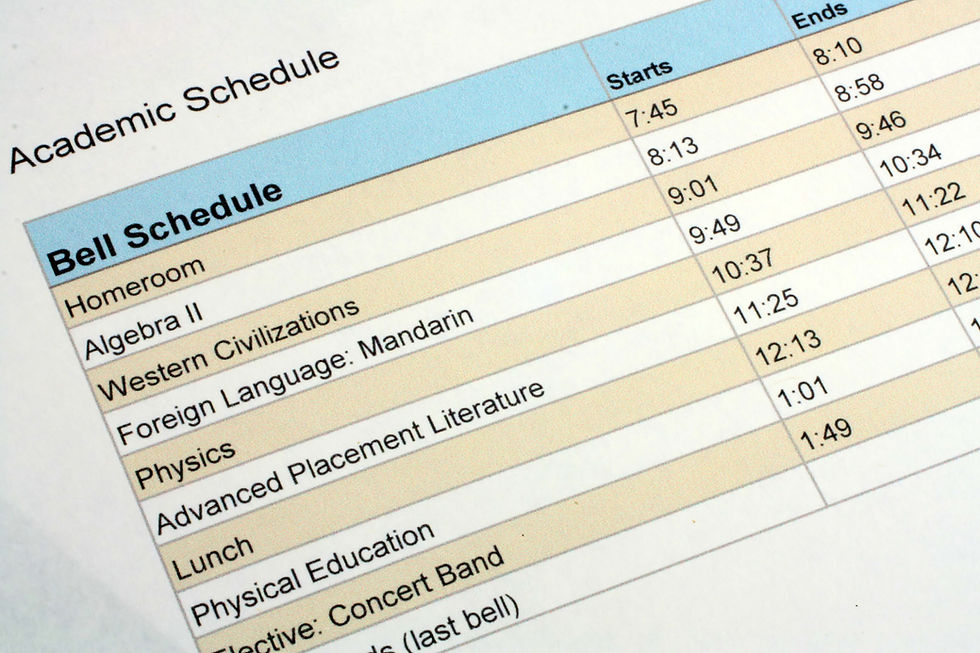
I recently had to write an assignment about a fictional autistic high school student moving from a specialized school into mainstream classes. The assignment only gave me three paragraphs. My brain refused. There’s too much that matters, so I had to write it out here...
So here’s the part I wish every school team would start with:
Assess. Don’t assume.
Autistic students are not one “type.” Reports and IEPs can help, but they can also carry old bias and outdated conclusions. If you want a transition to work, you need a current, real-world picture of how the student functions in actual classrooms, not just on tests. Real-world executive functioning and stamina in school settings often don’t match standardized scores, and those day-to-day demands are what make or break success.
And yes, I’m writing from a neurodiversity paradigm. The goal isn’t to “fix” the student. The goal is to make school usable.
What to assess first (in the real world, not a perfect testing room)
Executive functioning during real school tasks.
Look for task initiation, working memory, planning, organization, and follow-through across classes and settings. Do not trust a single score to tell you how a student will manage the hallway-to-class transition, multi-step instructions, or “start now” demands.
How to collect it fast:
5-minute teacher observation notes during independent work (start time, number of prompts needed, stuck points)
A brief EF questionnaire + teacher comments
A quick “where does this break down?” interview with the student
Attention and stamina in noisy, busy classrooms
Some students can “know the content” and still melt down from the sensory and attention load of a mainstream class. Again: test performance does not reliably predict classroom stamina.
How to check it:
Observe in the loudest class and the quietest class
Track: time-on-task, recovery time after interruptions, end-of-class energy crash
Functional use of academic skills
Can they use reading/writing/math in new situations, under time pressure, with messy instructions and distractions? Inclusion research pushes us to measure access to curriculum, not just outcomes.
How to test it:
Collect real classwork samples done in-class (not at home)
Give one “novel task” with a timer and see what breaks: understanding? planning? output? proofreading?
The hidden curriculum (group work + unspoken rules)
Mainstream classrooms are full of invisible expectations. A student can be bright and still get crushed by “everyone knows what to do” situations. School-based social interventions target these exact skills (turn-taking, joining in, collaboration) and can improve inclusion outcomes.
How to assess it:
Watch 1 group task and note: entry, turn-taking, repair after confusion, role clarity
Ask the student afterward: “What did you think you were supposed to do?”
Skills that often need building (without turning the kid into a compliance robot)
Executive functioning and organization
Real-world EF challenges are common for autistic learners; intervention reviews show some promise for improving working memory, flexibility, and planning, especially when practice is tied to real tasks.
Task initiation and independent stamina
Explicit teaching, checklists and step-by-step visuals improve independence.
Social-academic participation
Peer-mediated and classroom-embedded approaches show improvements in social interaction and access.
Self-advocacy and transition skills
Postsecondary literature is very clear: autistic students often hit a wall later when they haven’t been taught how to ask for what they need, clearly and early. (This is a whole other topic I am diving into at the moment - there will be some new products to share soon!).
What to do in the classroom (evidence-backed, but actually practical)
Make expectations visible (explicit instruction + scaffolding)
Stop relying on “they should know.” Teach routines like you would teach content: model it, name it, checklist it, practise it.
Try this tomorrow:
Replace multi-step verbal directions with a 3–5 item visual checklist
Give one “start line”: “Open this book to page 3 and read question 1 only”
Use a single prompt sequence every time: “What’s step one?” → “Do step one” → “Show me”
Build supports into the environment, not just the kid
Peer supports and embedded strategies create real chances to practise inclusion, instead of isolating “social skills” in a separate bubble.
Try this:
Assign a peer partner for transitions and group entry
Use structured group roles (timekeeper, recorder, materials, speaker) so “participation” isn’t vague
Support EF with real assignments, not just “brain training”
Reviews show modest-to-moderate gains from EF interventions (including serious games and exercise), but it matters that practice transfers into real classroom tasks.
Try this:
“One EF strategy per week” (not 10)
Practise it on a real assignment that week, in class, with coaching
Teach self-advocacy like it’s a life skill (because it is)
A script is not babying. It’s a bridge.
Student scripts to practise (out loud, repeatedly):
“I’m not sure what to do first. Can you tell me the first step?”
“I need 2 minutes to reset. I’ll be back.”
“Can I have that written down?”
“Can I do the first two questions and check in?”
This aligns with postsecondary findings that many autistic students need better self-advocacy preparation before the stakes get higher.
A simple transition checklist for the team
Week 0–2 (right now)
Collect EF data during real class tasks (teacher notes + brief rating).
Gather in-class work samples under time constraints.
Identify top 2 sensory/attention barriers in mainstream rooms (noise, pace, transitions).
Set up one peer-mediated support for group work.
Weeks 3–6
Teach planner use + task breakdown as a routine (same format, every class)
Teach one initiation strategy (start line + first step checklist)
Practise one self-advocacy script in the moment, not just in counselling
Every 4–6 weeks
Review: task independence, assignment completion, participation, and stress signals
Adjust supports based on data and the student’s input (not just adult opinions)
References and Further Reading
Cavalli, G., et al. (2022). The efficacy of executive function interventions in children and adolescents with autism spectrum disorder: A systematic review. Journal of Autism and Developmental Disorders. https://pubmed.ncbi.nlm.nih.gov/34821185/
Ceruti, C., et al. (2024). Comparing executive functions in children and adolescents: A meta-analysis of ASD, ADHD, and comorbid profiles. Children, 11(4), 473. https://doi.org/10.3390/children11040473 Dean, M., et al. (2021). A systematic review of school-based social skills interventions for students with autism spectrum disorder in inclusive settings. Autism, 25(6), 1697–1713. https://doi.org/10.1177/13623613211012886
Hou, Y., et al. (2024). Effects of different exercise interventions on executive functioning in children with ASD: A systematic review and meta-analysis. Frontiers in Psychiatry, 15. https://doi.org/10.3389/fpsyt.2024.1440123
Kasari, C., et al. (2012). Randomized controlled trial of social skills at school for children with autism spectrum disorders. Journal of Child Psychology and Psychiatry, 53(1), 97–104. https://pubmed.ncbi.nlm.nih.gov/22118062/
Kim, S. Y., et al. (2021). Autistic undergraduate students' transition and adjustment experiences to higher education. Research in Developmental Disabilities, 112, 103913. https://doi.org/10.1016/j.ridd.2021.103913
Perrelet, V., et al. (2025). What are we targeting when we support inclusive schooling for autistic students? A systematic review. [Journal]. Retrieved from PMC. (2025). https://www.ncbi.nlm.nih.gov/pmc/articles/PMC12618732/
Timaná, L. C. R., et al. (2024). Use of serious games in interventions of executive functions for children and adolescents: Systematic review. JMIR Serious Games, 12(1), e59053. https://games.jmir.org/2024/1/e59053/
Tschida, J. E., et al. (2021). Real world executive functioning for autistic children in school and home contexts. Frontiers in Psychology. https://www.ncbi.nlm.nih.gov/pmc/articles/PMC8882695/
Wolpe, S. M., et al. (2024). A scoping review of autistic students’ postsecondary supports and transition experiences. Journal of Postsecondary Education and Disability, 37, 1–20. https://doi.org/10.1007/s40489-024-00448-z


Comments